Identify Where Needs and Resources Do Not Align
Organizations may know that important needs exist but still lack a clear picture of whether current services, programs, capacity, and resources are sufficient to address them.
Datacorp conducts service gap and resource gap analyses to compare identified needs with available resources, capacity, and access. This helps organizations see where services align well with need, where important gaps remain, and where additional attention or investment may have the greatest value.
When Gap Analysis Can Help
Organizations may benefit from a gap analysis when they need to:
- Identify Unmet Needs – Determine where existing programs or services do not adequately address identified needs.
- Understand Service Gaps – Identify populations, geographic areas, or types of need that current resources may not reach.
- Guide Resource Allocation – Focus limited funding, staffing, or other resources where gaps are most significant.
- Plan New or Expanded Services – Use evidence to determine where organizations may need additional capacity, programs, or services.
- Examine Access to Resources – Understand whether needed services exist but remain difficult for some populations to reach or use.
- Support System Planning – Develop a broader understanding of how well available resources align with needs across a community or service system.
Looking at Both Sides of the Gap
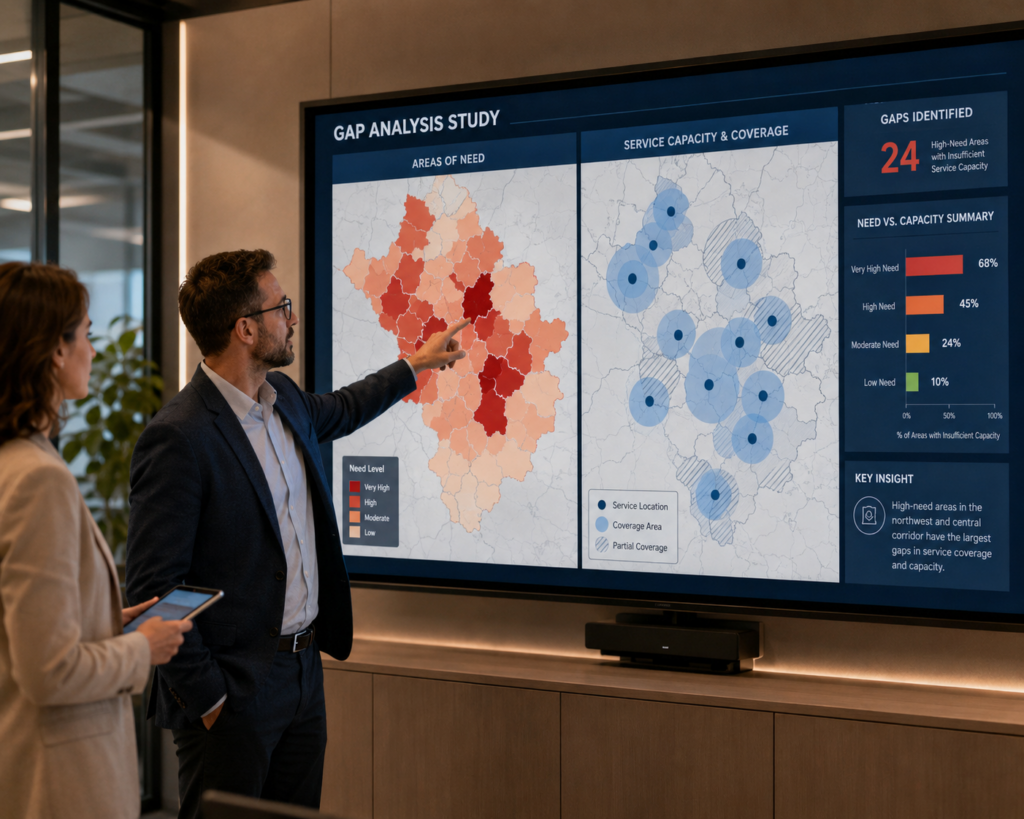
A meaningful gap analysis requires understanding both the need and the resources available to address it.
Datacorp brings together information about the scope and distribution of need with information about existing services, programs, capacity, and other resources. Depending on the question, relevant information may come from surveys, stakeholder perspectives, existing data, community indicators, service information, and organizational records.
Examining these elements together helps clients see where resources align well with needs—and where important gaps remain.
Understanding More Than Whether a Service Exists
The presence of a program or resource does not necessarily mean that it fully meets the need.
Differences in geography, capacity, populations served, eligibility, utilization, or other conditions can influence how well existing resources address identified needs.
Datacorp helps clients interpret these differences within context so they can better understand where additional attention is needed.
Gap Analysis in Practice
Service Availability Does Not Always Mean Needs Are Being Met
A community may have behavioral health services available, but appointment capacity, geographic access, eligibility requirements, or other barriers may prevent those services from meeting the level of need. Examining need alongside service availability and access can reveal where the true gap exists and help leaders decide whether to expand capacity, improve access, or direct resources differently.
Turning Gaps Into Planning Priorities
Gap analysis becomes most useful when organizations can translate the findings into decisions.
Datacorp helps clients use findings to prioritize needs, guide resource decisions, strengthen service systems, expand existing programs, consider new services, and support broader planning efforts.
The goal is not simply to identify what is missing. It is to provide information that helps organizations decide where change may have the greatest impact.
Need to Know Where the Most Important Gaps Are?
If your organization needs to understand how well existing services, resources, and capacity align with identified needs, Datacorp can help you develop a service or resource gap analysis to support focused planning, resource allocation, and action.