See the Patterns Shaping Communities and Populations
Community indicator analysis and social indicator studies help organizations understand how social, economic, demographic, health, and environmental conditions vary across communities, populations, geographic areas, and time. Looking at these conditions together can reveal patterns that are hard to see when you examine individual measures in isolation.
Datacorp helps clients use community and social indicators to identify emerging concerns, recognize disparities, understand changing conditions, and make better-informed planning and resource decisions.
When Social Indicator Studies Can Help
Organizations may benefit from a social indicator study when they need to:
- Understand Geographic Differences – Identify how needs, conditions, or outcomes vary across communities, neighborhoods, counties, regions, or other areas.
- Identify Trends Over Time – Examine whether important social, economic, health, or demographic conditions are improving, worsening, or remaining stable.
- Recognize Disparities – Identify populations or geographic areas with meaningful differences in conditions or outcomes.
- Support Resource Allocation – Use evidence about where needs are concentrated to help guide programs, services, funding, or other resources.
- Strengthen Community Planning – Develop a broader understanding of the conditions that may influence community priorities and service needs.
- Bring Multiple Indicators Together – Examine related measures collectively to develop a more complete picture of a complex issue.
Seeing Patterns Across Place and Time
Individual statistics provide useful information, but they may not reveal the larger patterns affecting a community or population.
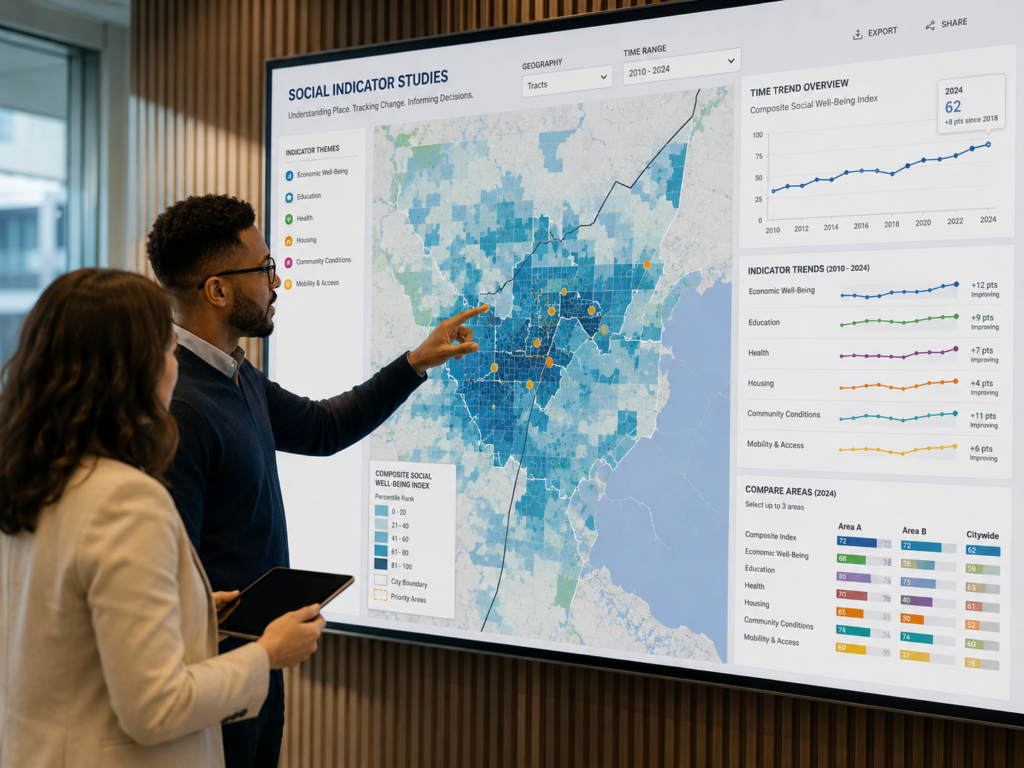
Datacorp brings together demographic, health, social, economic, geographic, and other relevant information to help clients understand how conditions relate to one another and how they vary across place and time. Geographic mapping and community data analysis can also make important patterns and disparities easier to recognize and interpret.
Turning Indicators Into a More Complete Picture
Complex community issues rarely have a single measure that tells the whole story.
Datacorp helps clients examine related indicators together to develop a more complete understanding of the conditions or issues they are studying.
The goal is not simply to assemble more data. It is to identify patterns and relationships that help organizations understand what is happening and where attention may be needed.
Using Social Indicators to Guide Planning and Resources
Social indicator studies can help organizations move from broad community information to clearer planning priorities.
Datacorp helps clients interpret geographic and population patterns to support service planning, resource allocation, needs assessment, prevention planning, strategic decisions, and other community or organizational priorities.
Community Indicators in Practice
Countywide Community Context and Indicator Analysis
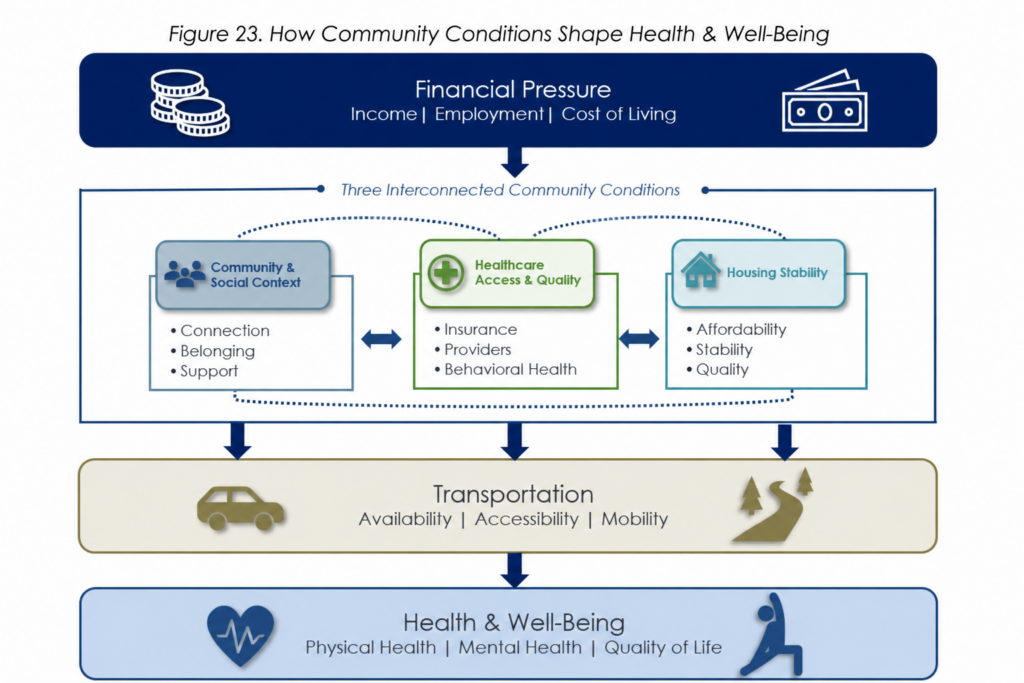
Datacorp conducted a countywide assessment examining how social connection, healthcare access, housing, financial pressures, transportation, and other community conditions shape health and well-being. Analysis across population groups and geographic areas identified key patterns and disparities, while integrated findings showed how community conditions interact. The results gave community partners clearer information for health improvement planning, resource decisions, and collaborative action.
Related Assessment Services
Needs Assessment
Understand community needs, strengths, priorities, and opportunities by drawing on information from multiple sources.
Gap Analysis
Identify differences between current conditions and desired services, capacity, performance, or outcomes.
Need a Clearer Picture of What Is Shaping Your Community?
If your organization needs to understand geographic patterns, changing conditions, disparities, or how multiple indicators intersect around an important issue, Datacorp can help develop a community indicator study to support informed planning and action.